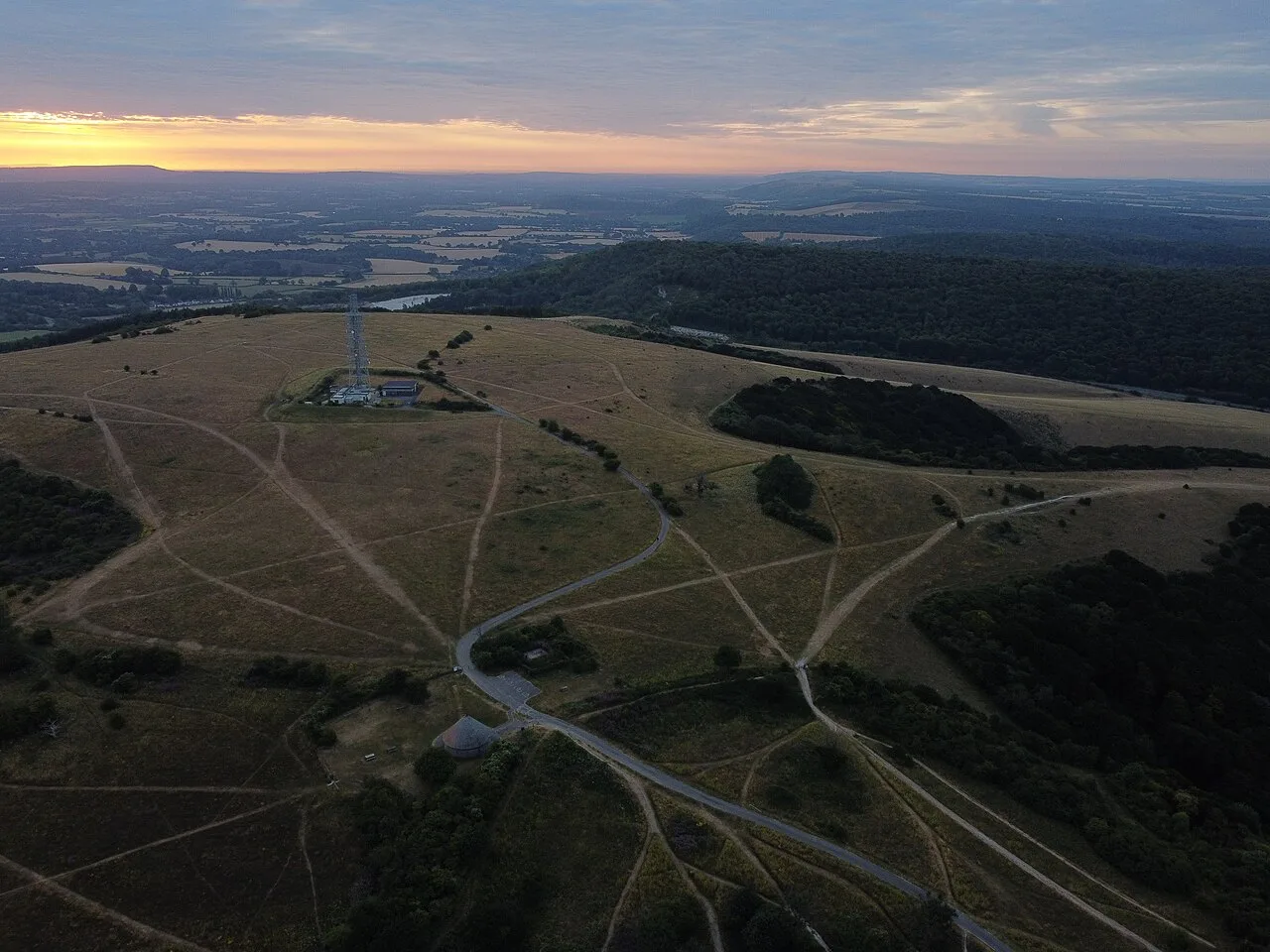

A three-year, £160,000 project will restore 48 hectares of chalk grassland on Butser Hill, three miles south of Petersfield, for the Chalk Hill Blue and the scarce Duke of Burgundy. What is being done and who is paying.
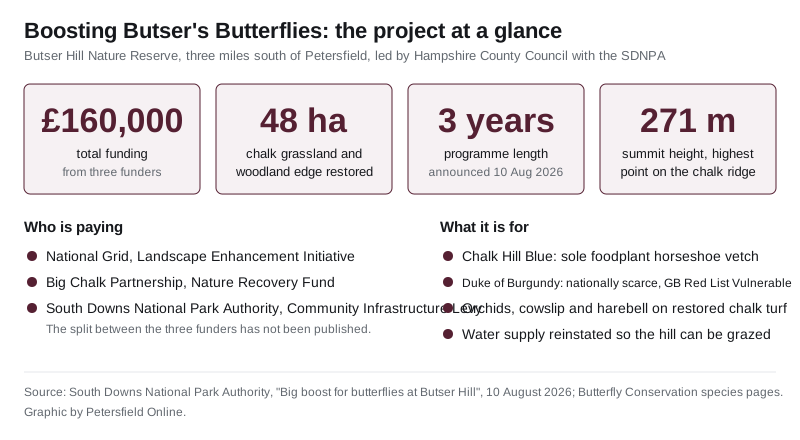
Butser Hill, the 271-metre summit three miles south of Petersfield, is getting a three-year, £160,000 restoration aimed squarely at its butterflies. The Boosting Butser’s Butterflies project will restore 48 hectares of chalk grassland and woodland edge on the nature reserve, an area the South Downs National Park Authority puts at “around 2,000 tennis courts”, according to the Authority’s announcement of 10 August.
The species named as the beneficiaries are the Chalk Hill Blue and the nationally scarce Duke of Burgundy, along with the orchids, cowslip and harebell that grow on thin chalk soils and nowhere else. Butser is the highest point on the South Downs chalk ridge and sits inside Queen Elizabeth Country Park, which the county council manages, so this is the biggest single piece of habitat work announced on Petersfield’s doorstep in some time.
What the money is for
The project is led by Hampshire County Council, which manages the reserve as part of the country park, working with the National Park Authority. Its £160,000 comes from three pots: National Grid’s Landscape Enhancement Initiative, the Big Chalk Partnership’s Nature Recovery Fund and the National Park Authority’s own Community Infrastructure Levy money, the charge developers pay on new building inside the Park.
The headline works, as set out by the Authority, are:
- A natural water supply reinstated on the hill, so that livestock can graze areas that currently cannot be grazed. Conservation grazing is described as “a more natural, less intensive approach” to managing chalk grassland than machinery, and long-term grazing is expected to improve soil quality and increase the range of flowers.
- Features that reinstate the chalk landscape, opening the sward that these butterflies need. The Duke of Burgundy, Vulnerable on the 2022 GB Red List, lays its eggs on cowslip and primrose in scrubby grassland and sunny clearings; the Chalk Hill Blue’s sole caterpillar foodplant is horseshoe vetch, which grows only on chalk and limestone grassland.
- Better visitor access to this part of Butser, and natural features to screen the pylons on the horizon. National Grid’s Landscape Enhancement Initiative exists to soften the visual impact of its own lines, which explains its place among the funders.
The Authority also lists lower wildfire risk, better land management and more carbon stored in plants and soils among the expected gains. National Park rangers will support the county council’s countryside team with volunteer tasks and monitoring of what the work achieves.
Why Butser matters for these butterflies
Chalk grassland is one of the richest habitats in Britain for its size and one of the most reduced; the National Park Authority describes butterflies as “synonymous with the South Downs” and chalk grassland as “an amazing habitat for so many species of animals and plants”. Allison Potts, its Director of Landscape and Operations, said the Authority wanted “more nature everywhere for everyone” and that the initiative “will enhance a really key site in the National Park”.
For Hampshire County Council, Councillor Kirsty North, Cabinet Lead Member for Universal Services, said the project “shows how practical action can deliver real benefits for both people and wildlife” and would leave “a lasting legacy for future generations”. Both quotes are from the Authority’s release.
The Authority frames the work as part of a wider effort to “revive and reconnect chalk and limestone ecosystems across southern England”, which is what the Big Chalk Partnership was set up to do. Butser itself has been valued for a very long time: the hill carries the remains of Bronze Age round barrows and Iron Age earthworks and hillfort ditches, and its name comes from the Old English Bryttes Ora, “Briht’s slope”.
What it means for you
- The hill stays open. Nothing in the announcement closes Butser or its car park. Entry to Queen Elizabeth Country Park is free and you pay only to park; the tariffs and which of the eight car parks to use are in our things to do in Petersfield round-up.
- Expect grazing animals on parts of the hill that have not been grazed before, once the water supply is in, and works on the ground over the next three years while the landscape features go in. If you walk a dog on Butser, keep it under control around stock; the release does not say which areas will be grazed first.
- The best time to look for the target species is spring for the Duke of Burgundy, which overwinters as a chrysalis and flies in very low numbers, and August for the Chalk Hill Blue, when Butterfly Conservation says many hundreds may be seen at good sites. This year’s flight season is nearly over; the first year the project can realistically show a difference is 2028.
- You can take part. The rangers’ volunteer tasks are how most of the hands-on work on Butser gets done. The National Park Authority’s volunteering page lists the current opportunities.
- It is CIL money in part. The National Park Authority’s share comes from developer contributions on schemes inside the Park, the same pot that new housing in Petersfield feeds. Our Petersfield planning page covers where those homes are proposed.
What we could not confirm
Hampshire County Council’s own website could not be reached for this story, so the county council’s version of the announcement, and any detail on timing of the first works, is taken from the National Park Authority’s release only. We will update when the county council publishes a schedule.
Have your say