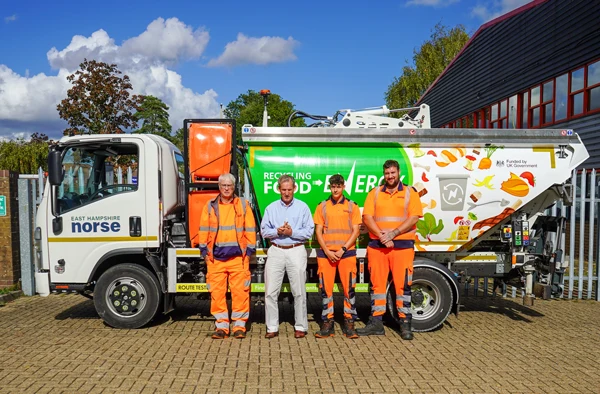

All seven lorries collecting Petersfield and Alton's food waste are trialling hydrotreated vegetable oil instead of diesel. Checked November 2026.
The seven lorries that empty food waste caddies in Petersfield, Alton, Bordon, Liss, Liphook and the rest of East Hampshire are now running on hydrotreated vegetable oil (HVO) rather than diesel, East Hampshire District Council said on 5 November.
The council calls it a trial. Nothing changes for households: your caddy still goes out on the same day each week, and the weekly food waste service that began in October carries on as before.
Why the council is doing it
The weekly food waste round added a whole new fleet to the district’s roads. Councillor Robert Mocatta, the council’s portfolio holder for Regeneration and Prosperity, which includes climate and environment, was frank about the cost of that:
“The introduction of seven new vehicles visiting more than 57,000 homes district-wide every week was always going to add to the carbon footprint of our waste services.
“By trialling using HVO for food waste collections, we’re taking steps to minimise the impact that collecting the waste has on the environment as well as providing the environmental benefits of natural gas and fertiliser from the anaerobic digestion process.”
The council says the production and use of HVO reduces greenhouse gas emissions compared with standard diesel, pointing to a fuel company’s page on HVO. It also says HVO burns cleaner, with less soot, sulphur dioxide and other airborne particles, and that it is non-toxic, biodegradable and odourless, which makes it safer to handle and less harmful if any is spilt.
No new lorries needed
The food waste vehicles are standard diesel lorries. According to the council, they were emptied of diesel and switched to HVO without any specialist adaptations, so they can go back to diesel later if needed.
The council has not said how long the trial will run, what the fuel costs compared with diesel, or whether HVO could be used in the rest of the bin fleet.
What it means for you
- Nothing changes on bin day. Put your food caddy out as usual. Your day is on MyEHDC, and our Petersfield bin collection days page explains how to find it.
- The food you put in the caddy is the point. As Cllr Mocatta says, the collected food goes to anaerobic digestion, which produces gas and fertiliser. The council’s food waste collections page has more on the service.
- Missed caddy? Our food waste explainer covers what to do.
Have your say